

Marvel at early-1900s GD-HK masterpieces
Source: Shenzhen DailyUpdated: 2026-06-18
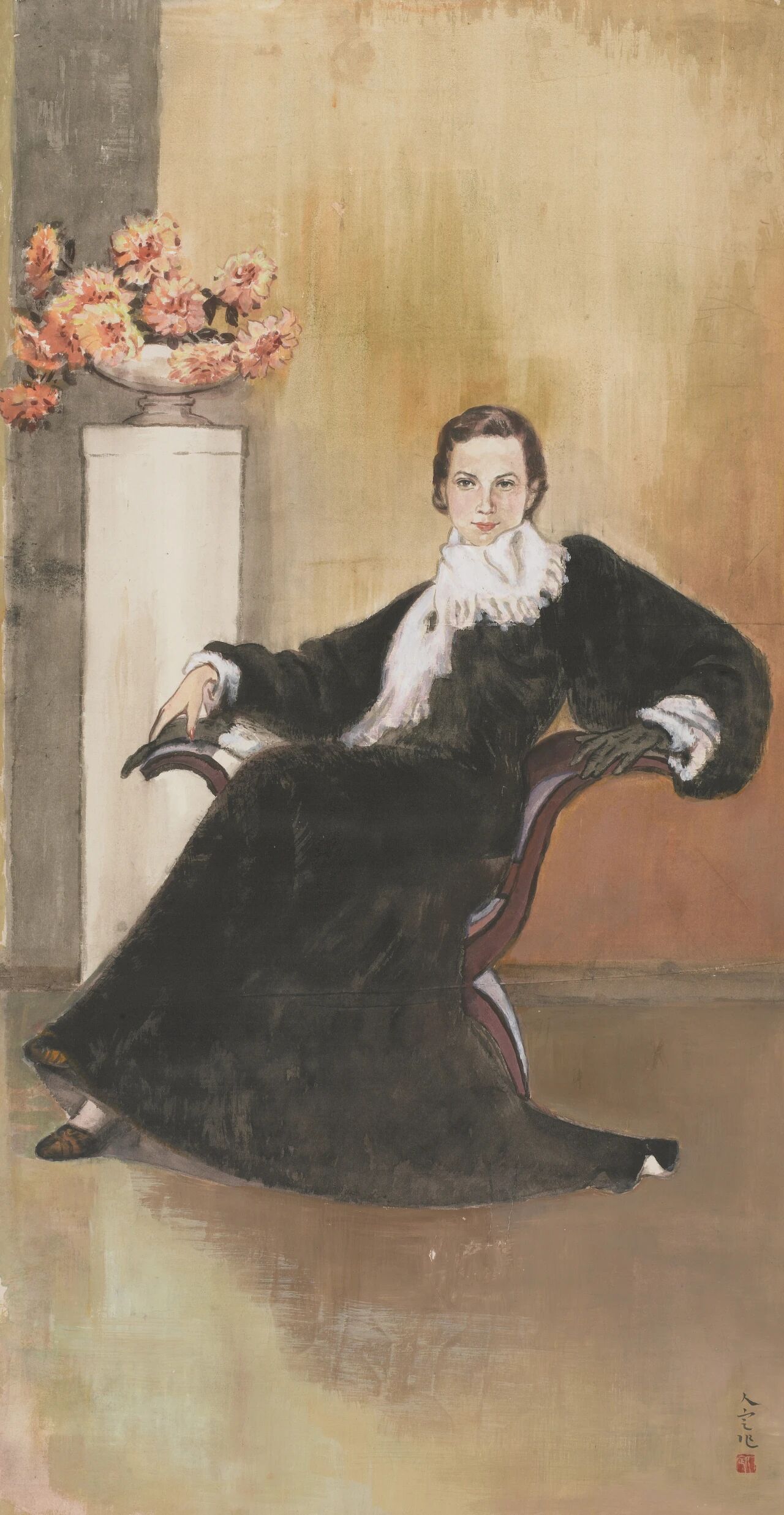
A painting created by Fang Rending in 1942 is on display at the “Establishing New Fine Arts” exhibition at the He Xiangning Art Museum. Image from the exhibition organizer
In this humid summer rain season, spending an afternoon in air-conditioned exhibition halls to enjoy paintings by masters — such as Gao Jianfu, Chen Shuren, Li Xiongcai, and Zhao Shao’ang — is a cool and refreshing experience.
The newly opened “Establishing New Fine Arts” at the He Xiangning Art Museum invites visitors to trace how fresh artistic ideas took shape and flourished amid the changing tides of the era.
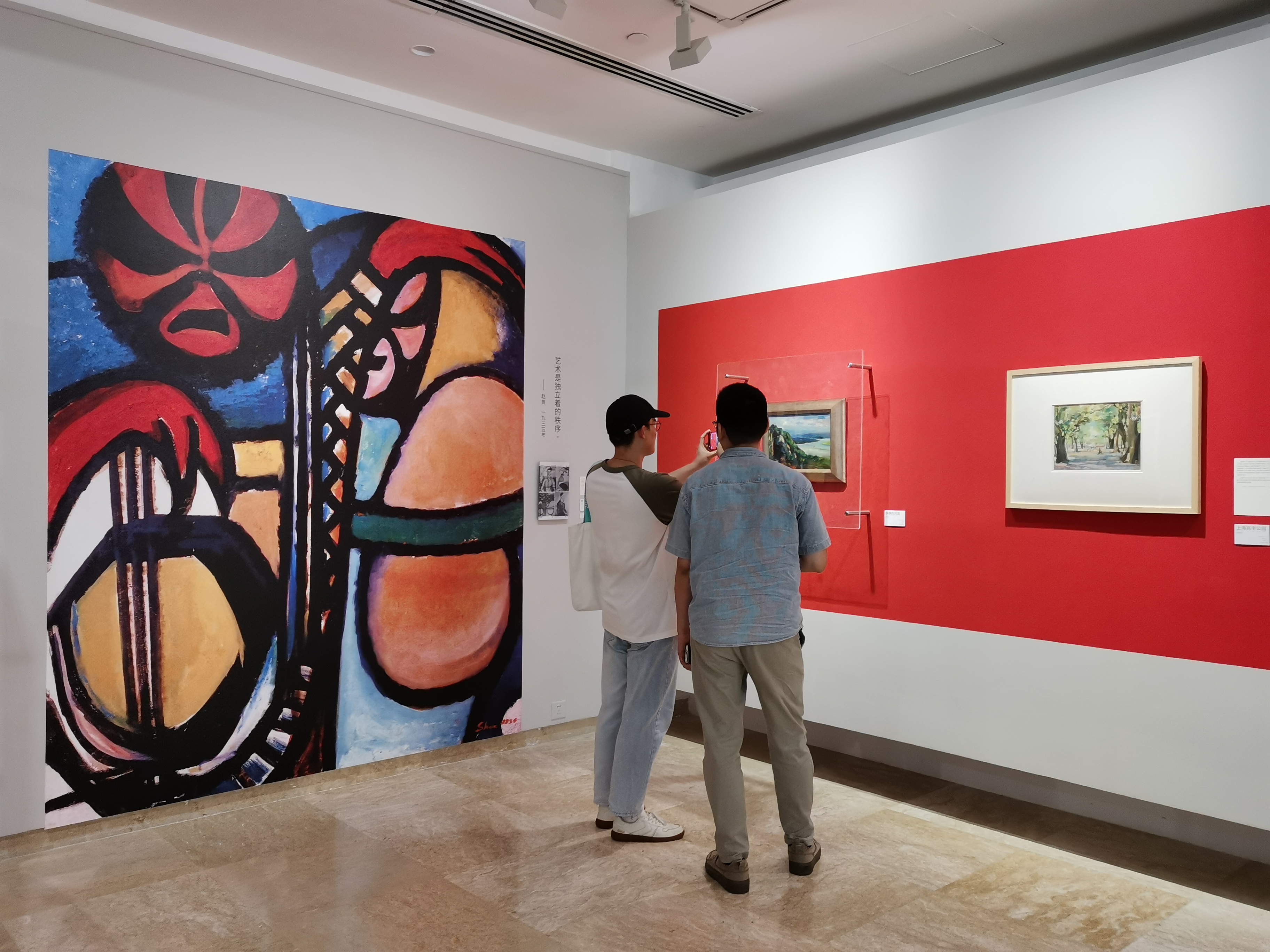
The large painting on the left is a replica of Zhao Shou’s oil painting created in 1934. Photos by Cao Zhen unless otherwise stated
Featuring 127 original works and dozens of historical documents, the exhibition explores the transformation of the Guangdong-Hong Kong art scene in the early 20th century — a period marked by experimentation and reform.
According to Hu Bin, who co-curated the exhibition with Lai Zhiqiang, the title comes from a slogan of the Renjian Art Association founded in Hong Kong in 1946. The exhibition examines the rise of new traditional Chinese painting, new Western painting, the New Woodcut Movement, and new realism, showing how modern Chinese art evolved in step with a shifting society.
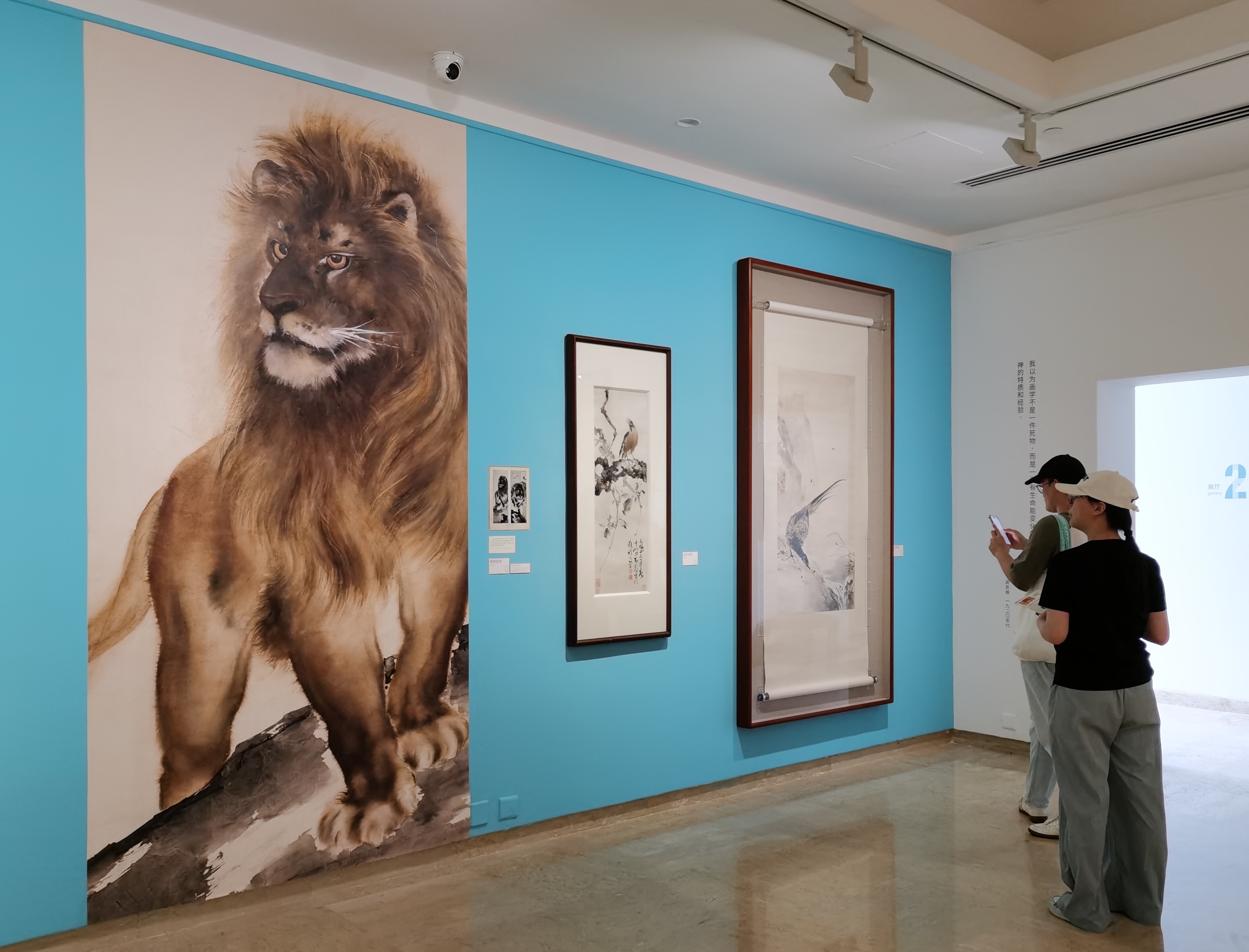
The large lion painting is a replica of Gao Qifeng’s work.
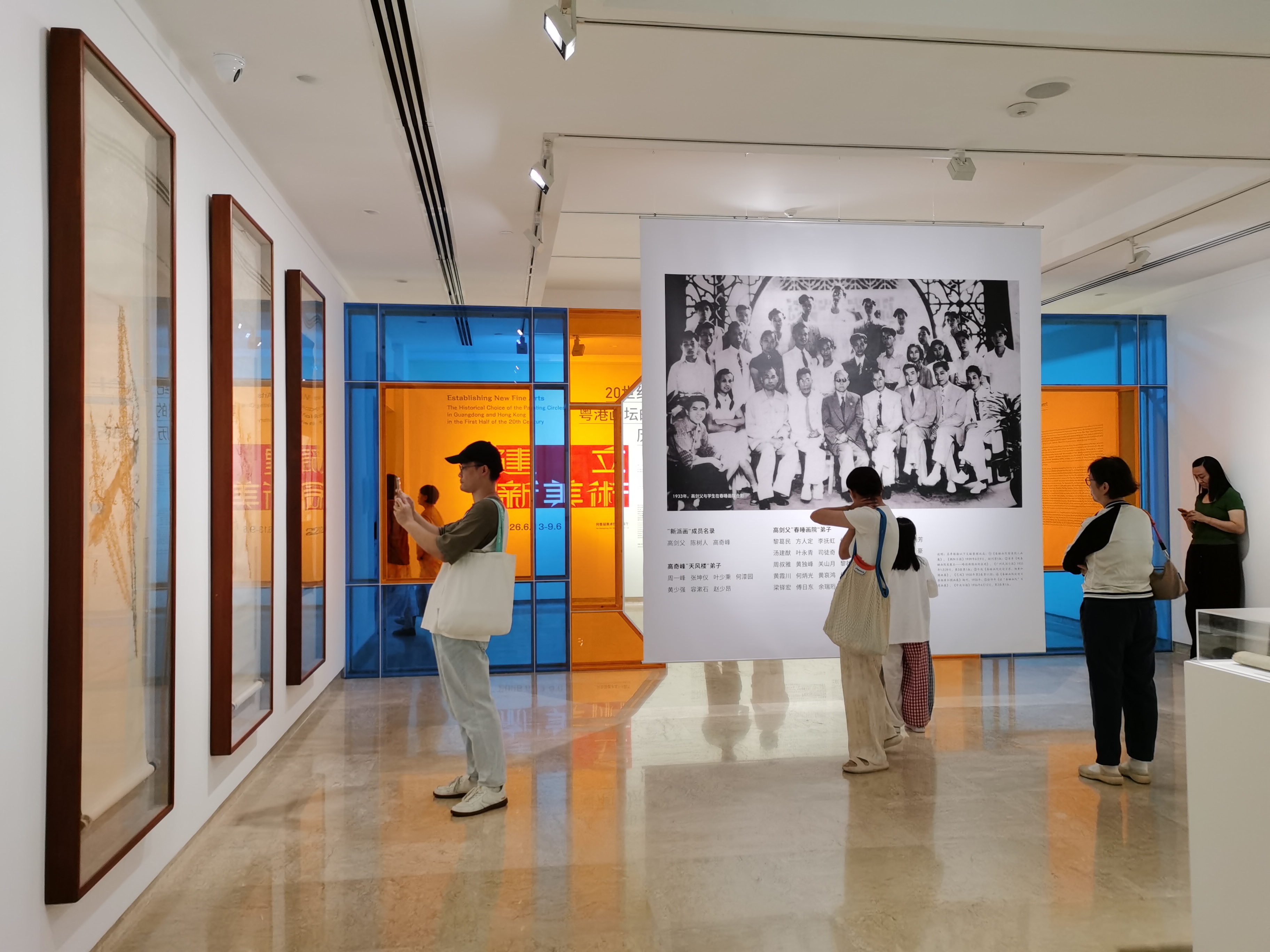
Visitors take photos at the exhibition.
Notably, the exhibition uses major art institutions and groups of the time as its main thread, including the Chunshui Painting Academy (founded by painting master Gao Jianfu in Guangzhou in 1923), the Chishe Art Research Society (set up by a group of overseas-trained artists in Guangzhou in 1921), the Guangzhou Modern Woodcut Society (launched by Li Hua, a teacher at Guangzhou Fine Art School, together with 27 students in 1934), and the Renjian Art Association (founded by artists in Hong Kong in 1946).
The artists of that time gradually understood that art was not only about color, form, line, or composition; and Chinese art needed to engage with reality — moving from individual expression to broader concerns with people and social reflection.
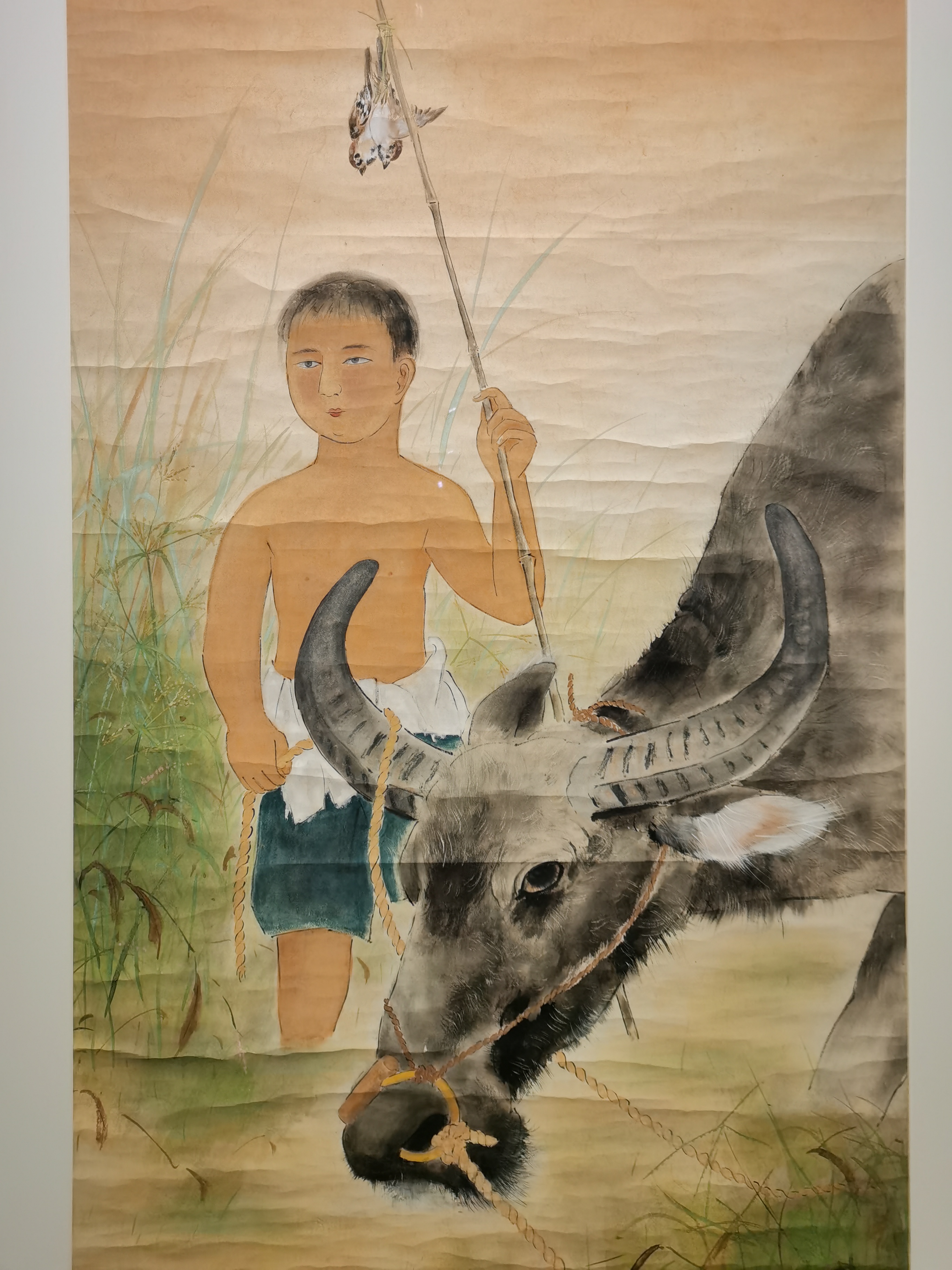
Part of a painting created by Fang Rending in 1937.
Hu Bin, dean of the School of Arts and Humanities at Guangzhou Academy of Fine Arts, said that focusing on these old institutions and groups offers a fresh perspective on the artistic exchanges between Guangdong and Hong Kong at the time.
Cai Xianliang, director of the He Xiangning Art Museum, noted that Lingnan art, known for its regional character and reforming spirit, carries openness and innovation alongside an international outlook.
“Art history is not a static relic,” he said. “It is a constantly flowing narrative that requires ongoing research and exploration. Through thematic and case-study research in art history, the He Xiangning Art Museum seeks to explore the diversity of art and culture in southern China.”
Li Jinkun, chairman of the Guangdong Federation of Literary and Art Circles and director of the Memorial Hall of Lingnan School of Painting, pointed out that many Guangdong artists in the early 20th century were both revolutionaries and cultural pioneers. He said the exhibition is another important step in documenting the region’s art history.
Liu Wenbin, chairman of the Shenzhen Federation of Literary and Art Circles, described Lingnan as a gateway where Eastern and Western civilizations met a century ago. “The spirit of ‘Establishing New Fine Arts’ remains an endless source of inspiration for cultural creators in the Guangdong-Hong Kong-Macao Greater Bay Area today,” he said.

Part of a painting created by Zhao Shao’ang in 1937.
A blend of scholarly depth and vibrant installations at the exhibition — featuring acrylic, steel, wood, neon, and bamboo — helps serious art history feel accessible to everyone.
Dates:Through Sept. 6
Hours: 9:30 a.m.-5 p.m., closed Mondays
Tickets:Free
Venue: He Xiangning Art Museum, Nanshan District 何香凝美术馆
Metro:Line 1 to OCT Station (华侨城站), Exit C

Copyright © Shenzhen Nanshan Information Network Center. All rights reserved.
Website ID:4403050037
ICP Registration Number:粤ICP备17157920号-1
 Police Registration Number:44030502001326