


Dance drama revives ancient murals on stage
Source: Shenzhen DailyUpdated: 2026-03-03
In a new production from China Oriental Performing Arts Group, dynamic choreography intertwines with the elegant mural lines of Shanxi’s Yongle Palace, blending ancient architecture, murals, glazed art and timeless heritage.
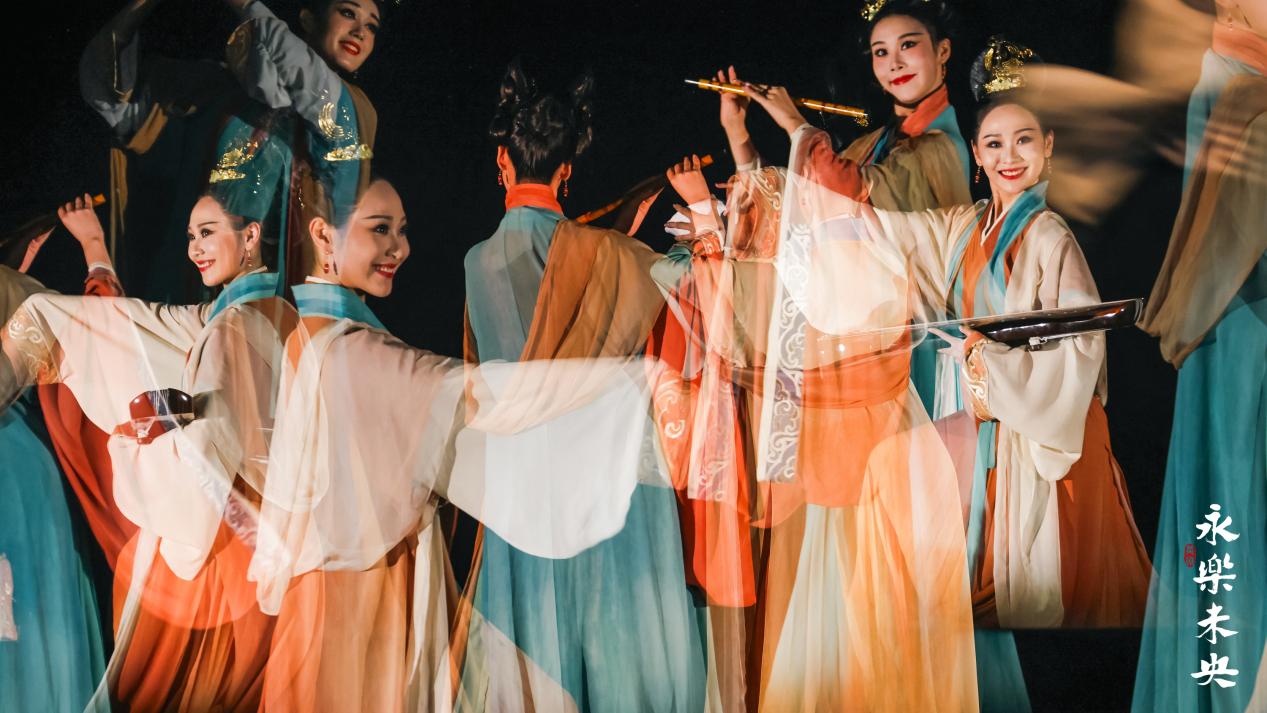
A scene from " The Palace Through Time."
The epic Chinese dance drama "The Palace Through Time" (“永乐未央” in Chinese), which premiered at Beijing’s Poly Theater on Oct. 3, 2025, kicked off its first national tour on Dec. 30 at the Shanxi Grand Theater, where it ran for four days with seven sold-out shows. It will tour to Shenzhen Poly Theater this April, with tickets now on sale via Damai, Maoyan, Douyin, and the WeChat miniprogram of “晶番网络科技.”
The work, while visually striking, tells an emotionally resonant story. An excerpt from the dance drama captivated millions during the Henan Province Spring Festival gala, broadcast live on Feb. 14.
While the show is staged, an exhibition featuring the Yongle Palace murals will allow audiences to experience the impressive cultural relics in the theater lobby. Meanwhile, those who purchase tickets for the performance are entitled to free digital entry tickets to six tourist destinations in Shanxi Province, including Yongle Palace.
The palace, a Yuan Dynasty (1271–1368) architectural complex located in Ruicheng County, Yuncheng, Shanxi, began construction in 1247 and was completed after 111 years. It covers an area of 248,000 square meters.
The palace currently houses 1,005.68 square meters of Yuan Dynasty murals, whose exceptional artistry has earned it the moniker “Oriental Art Gallery.” Among them, the most admired is the “Chaoyuan Tu” (“Court Assembly Painting”) in Sanqing Hall.
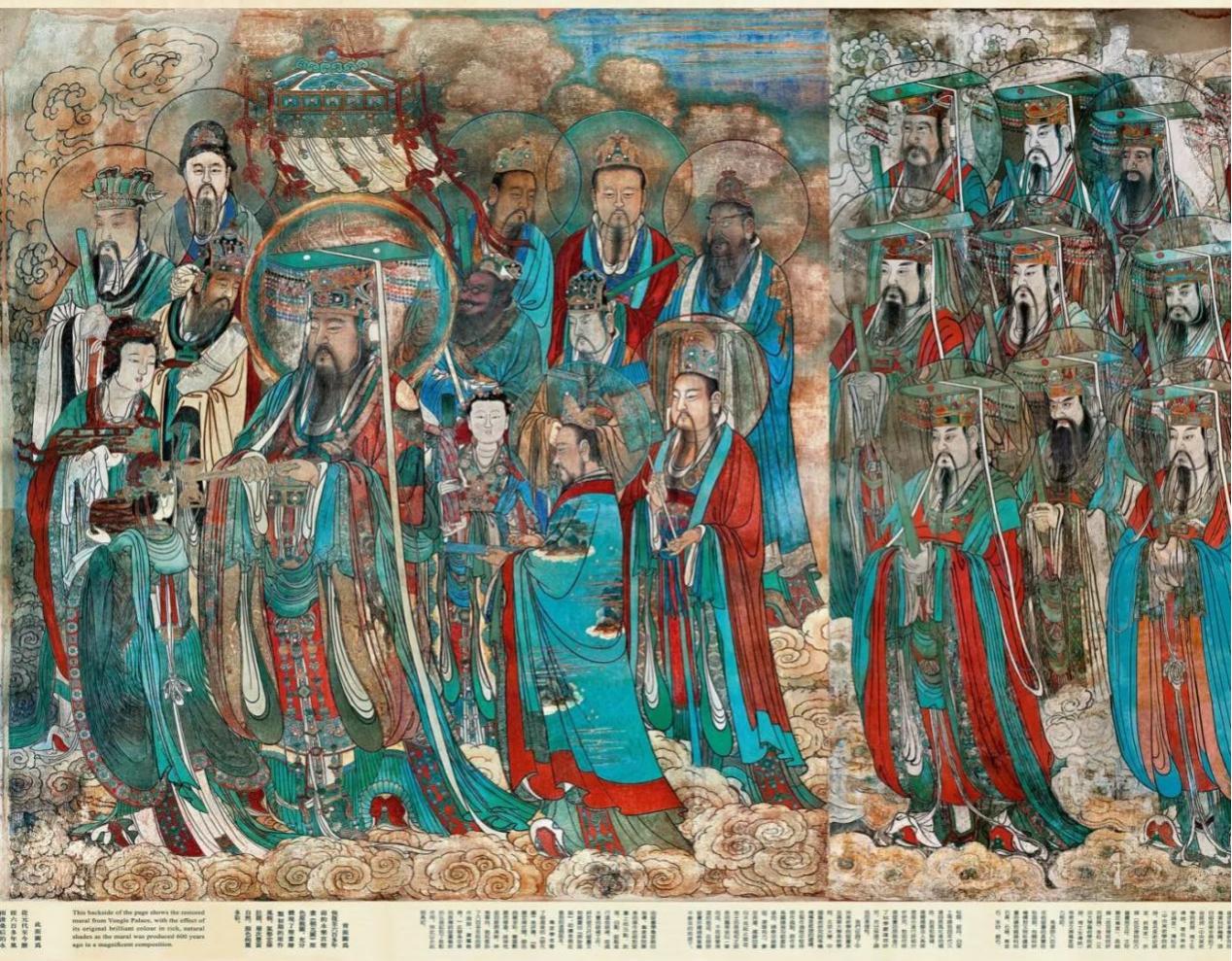
Parts of the "Chaoyuan Tu."
This masterpiece, 97 meters long and 4.4 meters tall, depicts the grand scene of Taoist deities paying homage to their prime god. The composition features 290 deities arranged on the eastern and western sides, centered around eight major gods. The layout is meticulously balanced, with no two figures sharing the same attire, headwear, or facial expressions, representing the pinnacle of ancient Chinese portraiture.
In the 1950s, when the Sanmenxia Reservoir was constructed on the Yellow River, this centuries-old architectural complex risked submersion. To preserve it, nearly 1,000 craftsmen and young builders spent 10 painstaking years dismantling, numbering, transporting, and ultimately reassembling the palace complex at its new site.
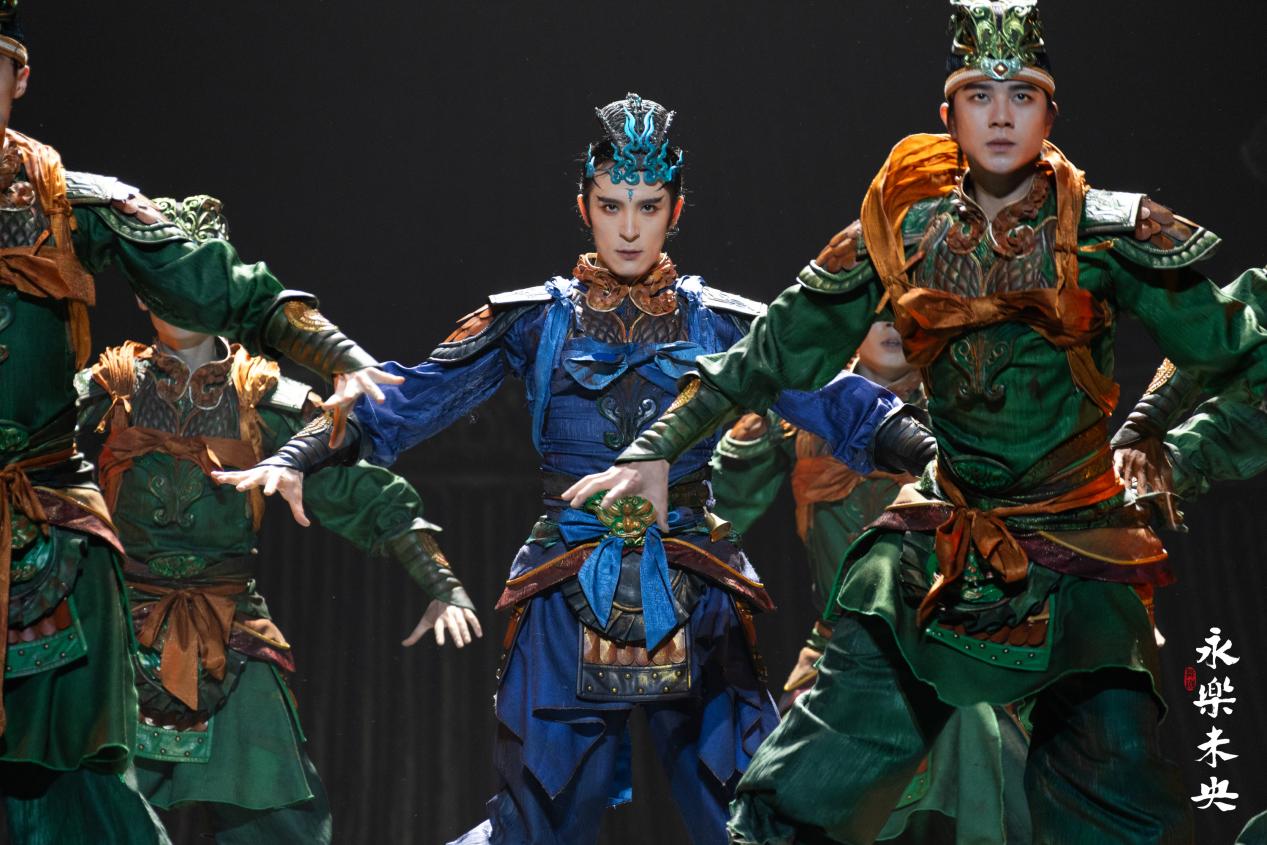
The dance drama draws inspiration from the murals of the Yongle Palace in Shanxi Province.
Centered on the epic relocation of Yongle Palace, the production unfolds through four chapters of interwoven storylines set across different eras. The four chapters focus respectively on the grandeur of the architecture, the artistry of the “Chaoyuan Tu,” the traditional technique of peacock blue glaze, and the strenuous relocation efforts of craftsmen and builders.
The production casts young dancers Ma Yuanze, Ding Taicong, Wang Jing, and Jin Guodong in leading roles. The script is provided by Xu Junrui, who wrote the scripts for “A Tapestry of a Legendary Land” and “Reunion of the Oasis.” Composer Lyu Liang, who composed the music for “A Tapestry of a Legendary Land,” also created the soundtrack for this production.
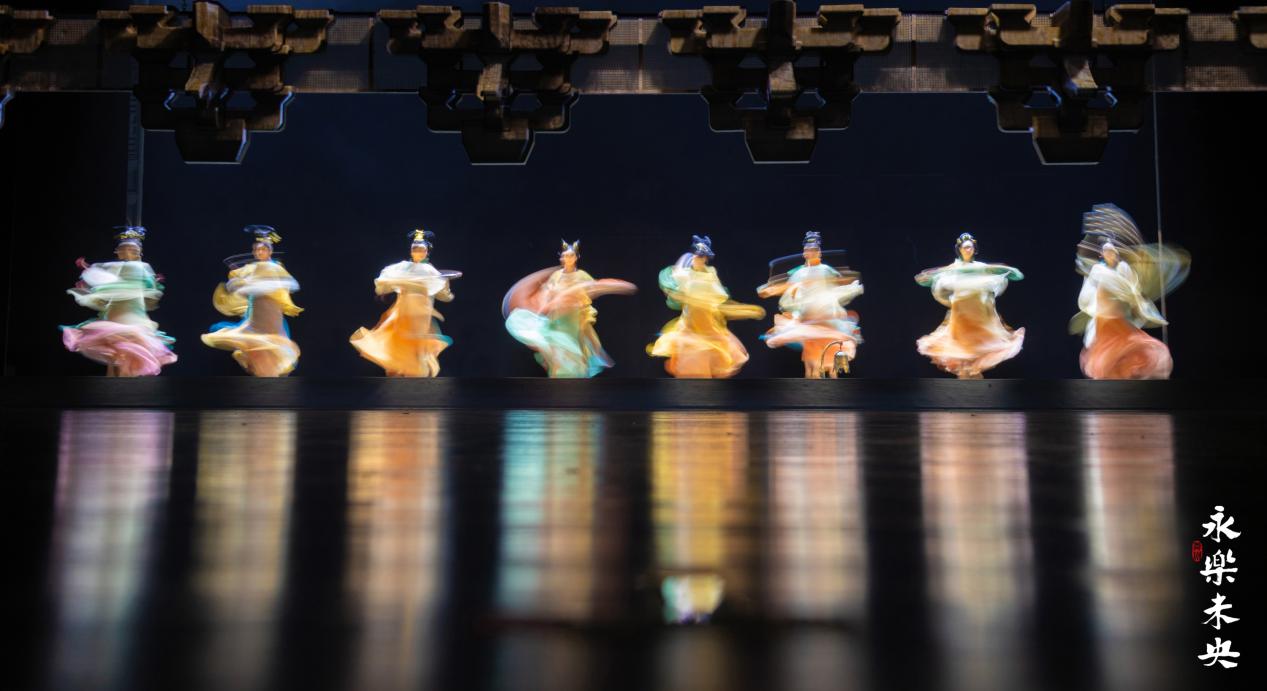
A scene from " The Palace Through Time."
The visuals are enhanced by cutting-edge holographic projections, which bring the ancient buildings and murals to life on stage.
Co-produced by China Oriental Performing Arts Group and Shanxi’s cultural authorities, the show will tour more than 30 Chinese cities, with over 50 performances.
Time: April 29-30
Tickets: 180-880 yuan
Venue: Shenzhen Poly Theater, Nanshan District (南山区深圳保利剧院)
Metro: Line 2, 11, or 13 to Houhai Station (后海站), Exit E

Copyright © Shenzhen Nanshan Information Network Center. All rights reserved.
Website ID:4403050037
ICP Registration Number:粤ICP备17157920号-1
 Police Registration Number:44030502001326