


New urban campus taking shape in Houhai
Source: Shenzhen DailyUpdated: 2026-04-17
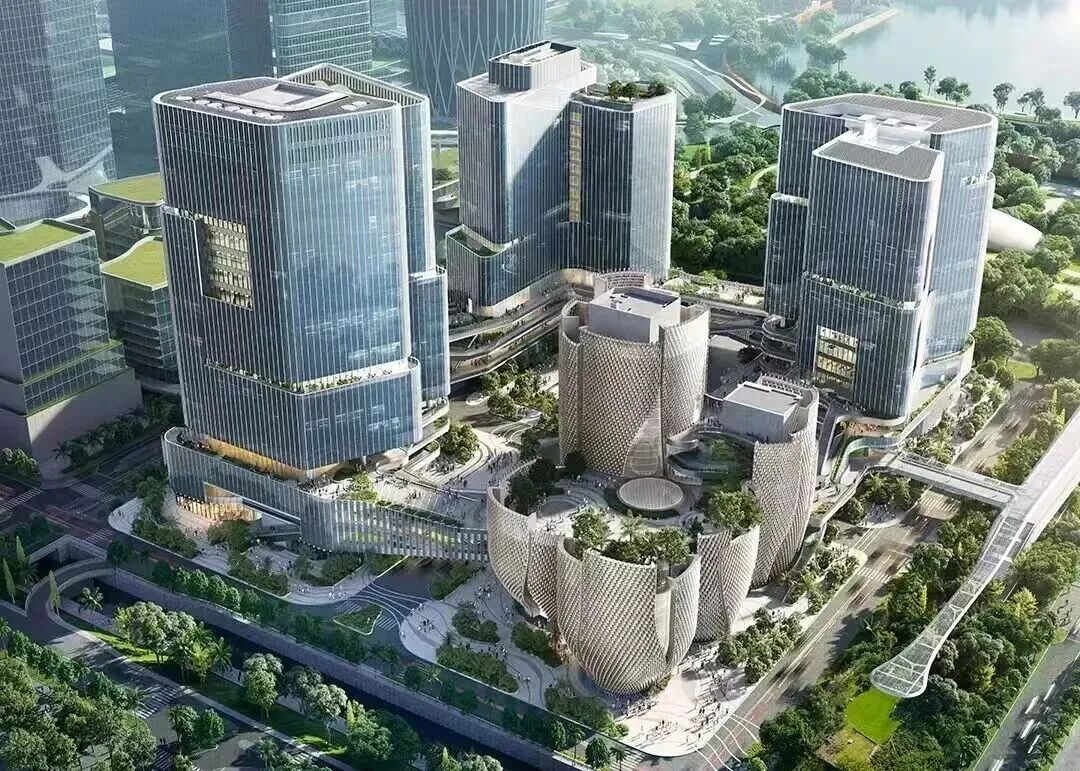
The M80 urban campus will be completed at the end of this year. Photos from buro-os.com
In Houhai, Nanshan's bustling heartland, a new urban campus designed by Ole Scheeren of Büro Ole Scheeren is taking shape.
Called M80, the complex is a 24-hour urban ecosystem integrating residences, offices, and retail. It has a total floor space of 228,000 square meters and consists of four towers linked by air corridors. Of the total space, 17% will be offices, 8% will be an art museum, 11% will be a luxury hotel, and the rest will consist of retail and public spaces. Construction is expected to finish by year-end.
The name M80 combines the ideas of “Mutualism,” “Message” and “Memory,” while 80 echoes the year 1980, when the Shenzhen Special Economic Zone was established.
The first four floors above ground will be dedicated to smart retail, while the first underground floor will host convenience stores and a food court, also connected to the metro station.
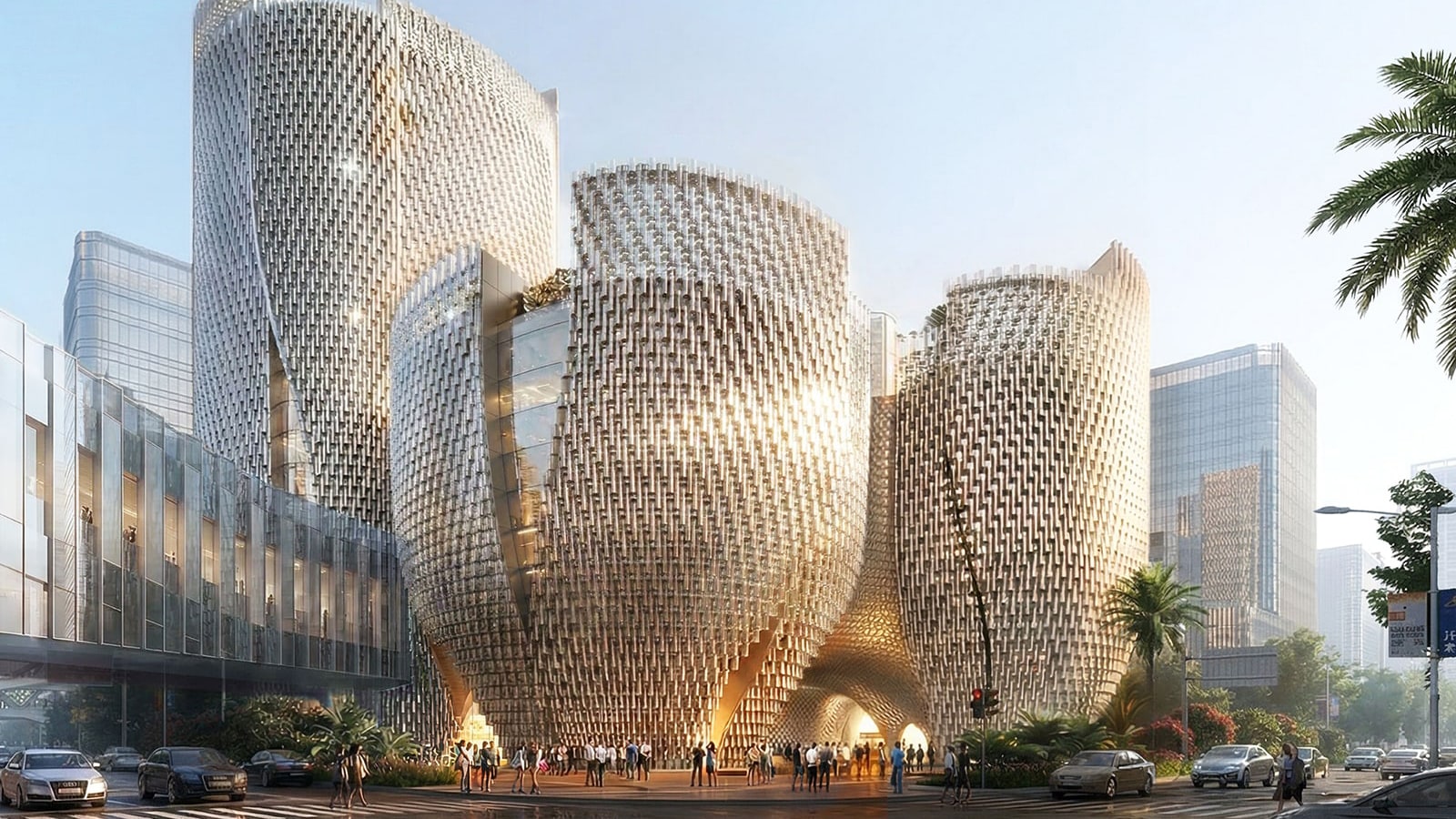
The museum is backed by Tencent chairman Pony Ma’s private venture Tenova Future.
The most conspicuous part of the hybrid urban campus will be the Rong Museum of Art, named after the Chinese character for “symbiosis” and “integration.” It marks a significant milestone in how Shenzhen’s tech-driven economy supports arts and culture. Commissioned by Tencent chairman Pony Ma’s private venture Tenova Future, the museum reflects a growing ambition among China’s entrepreneurs to contribute to public life and cultural infrastructure.
The most distinctive feature of the museum complex is the outer envelope of parametrically designed, suspended glass tubes. These create a translucent, woven-like veil that filters light, referencing the traditional Chinese use of glass not just for transparency, but as a filter of light.
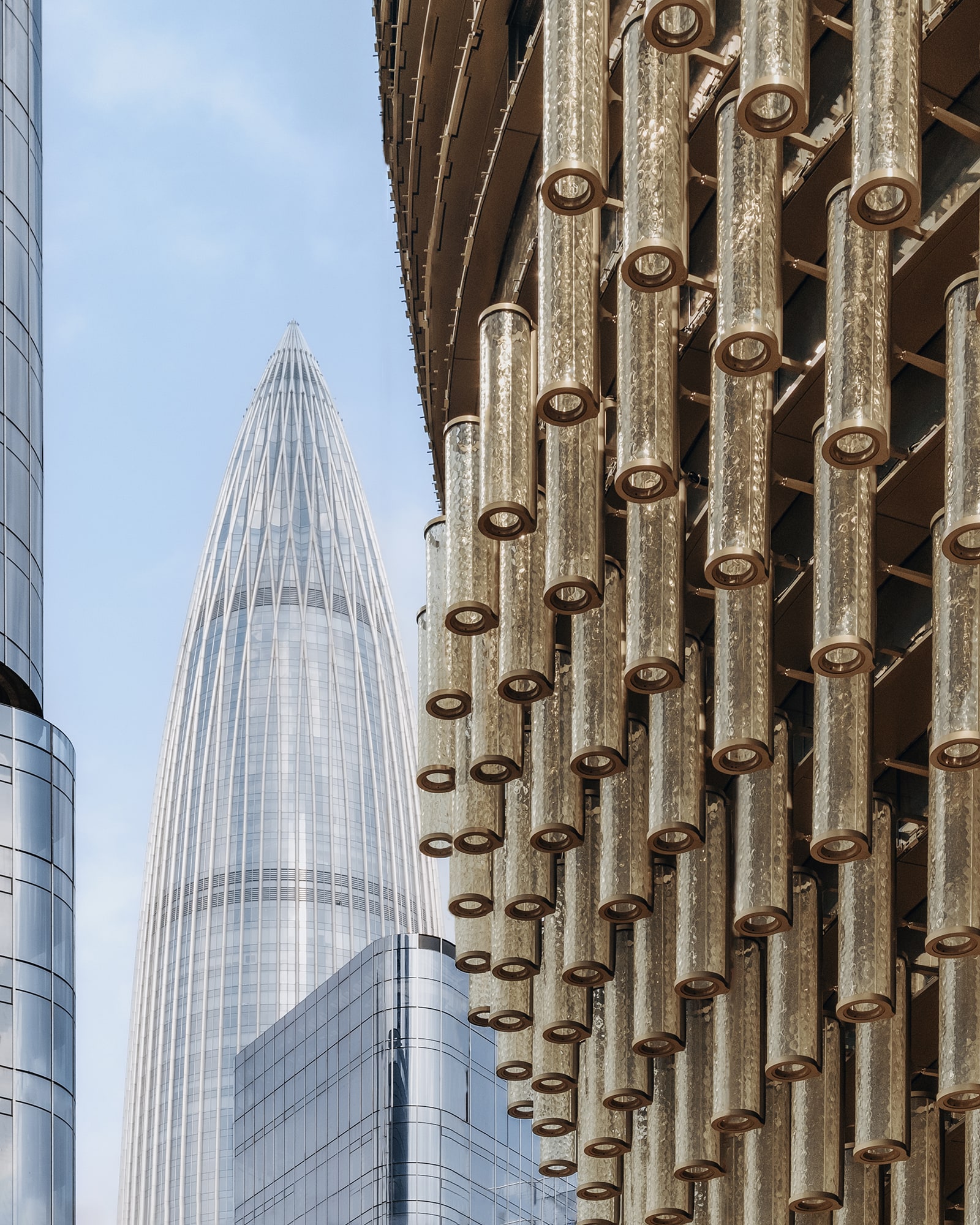
The museum complex features an outer envelope of parametrically designed, suspended glass tubes.
The glass tubes provide shading and ventilation, while the cone-shaped roofs harvest rainwater for recycling, contributing to Shenzhen's “sponge city” water management strategy.
The museum will focus on the visual culture of the 20th and 21st centuries, encompassing art, design, architecture, and digital media.
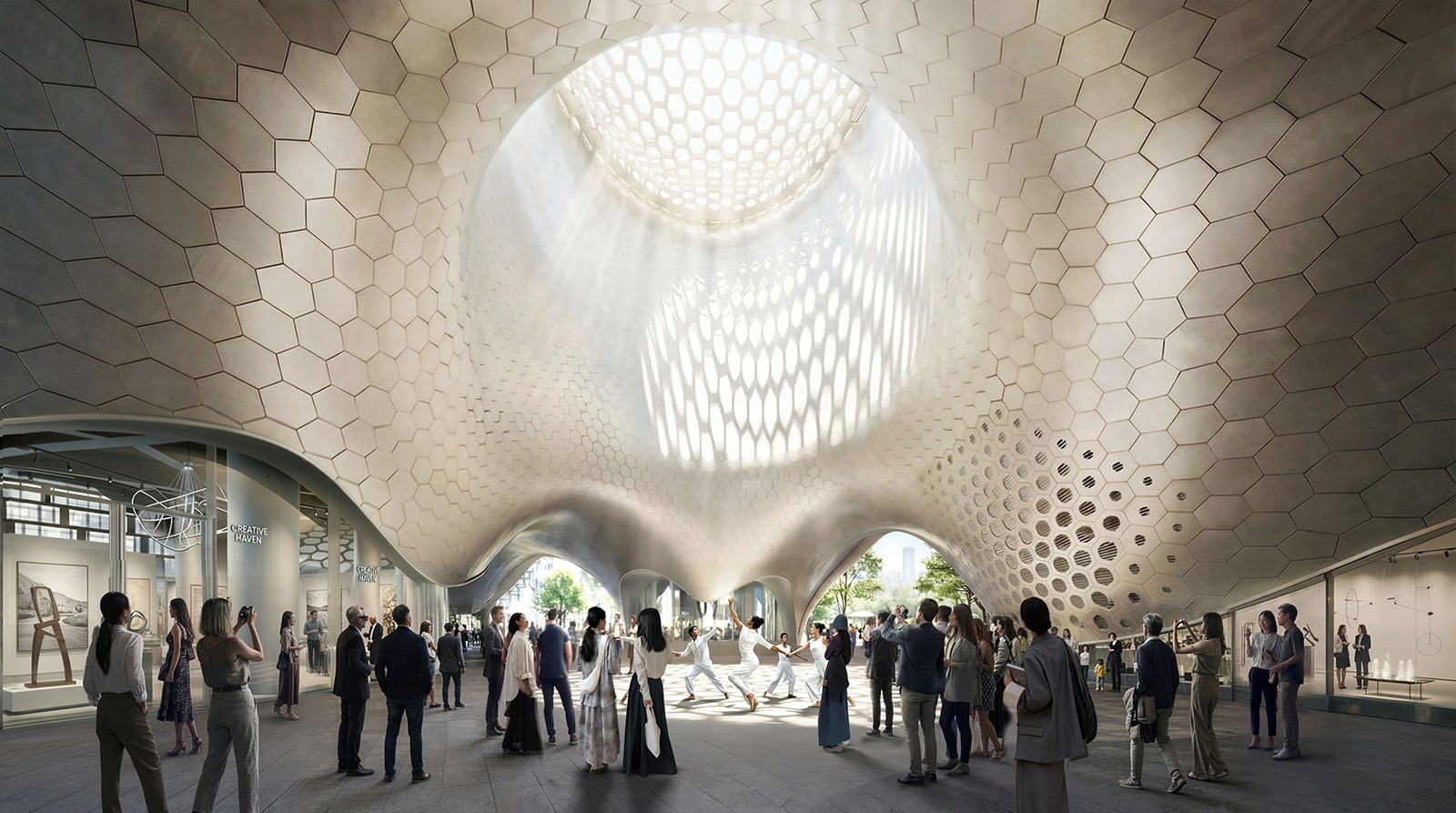
A computer generated image of the interior of the museum.
It will feature 2,300 square meters of gallery space out of a total museum area of 4,500 square meters, along with a major public art library, workshops, lecture and screening rooms, a rooftop garden, and a double-height gallery for large-scale installations.
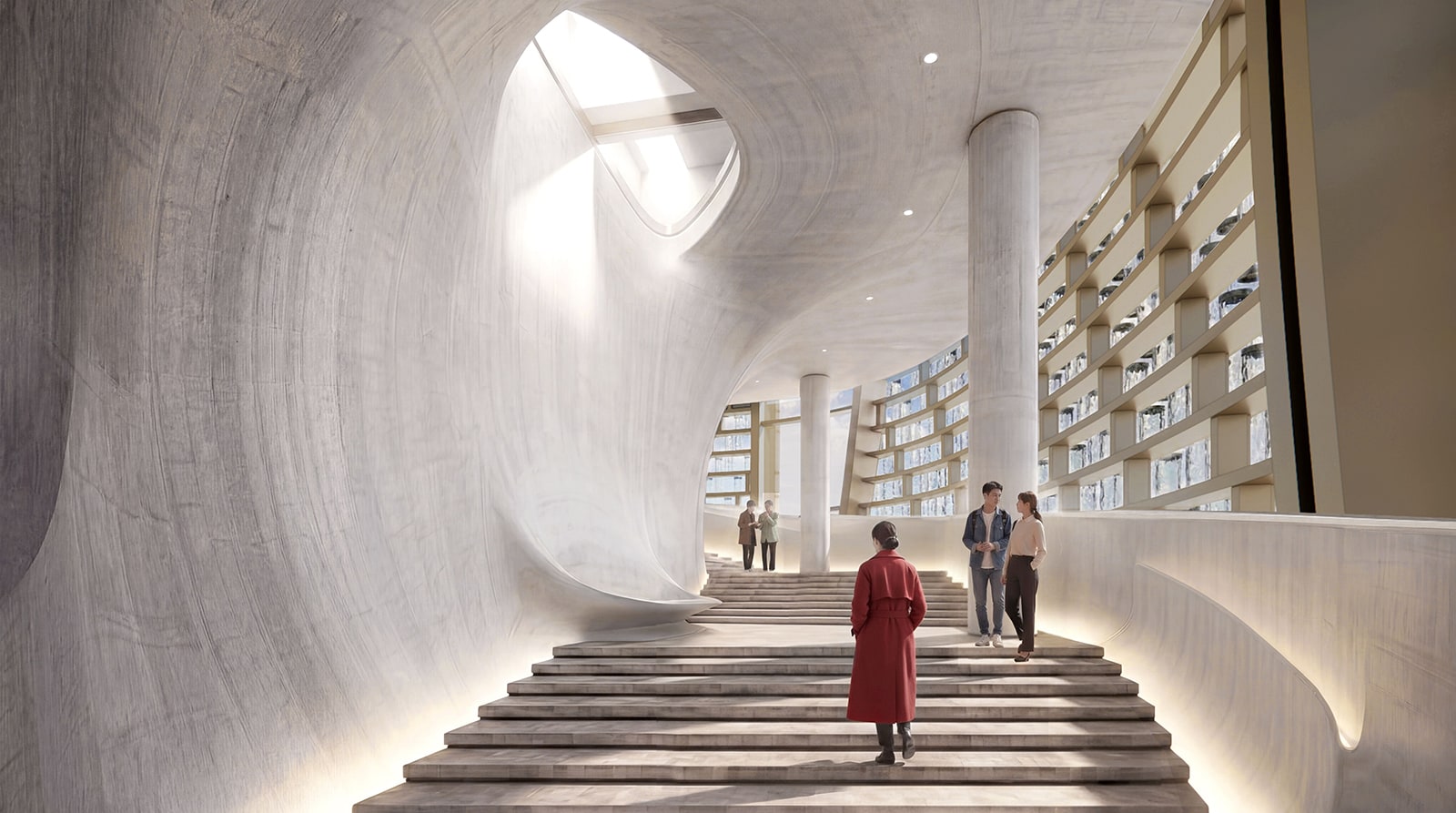
The museum will focus on visual art of the 20th and 21st centuries.
Veteran curator and critic Pi Li (formerly of M+ and Tai Kwun Contemporary in Hong Kong) has been appointed as the founding director, leading the institution toward its opening in 2027.
 Copyright © Shenzhen Nanshan Information Network Center. All rights reserved.